Updated November 2026
Small choices on a long coastline
You can keep your footprint small on a Norwegian voyage with a few simple habits, and the ship and the country already do a good deal of the work. This guide sets out what Hurtigruten has changed, what Norwegian law asks of ships and visitors, and what is worth doing yourself.
None of it is hard, and none of it gets in the way of the holiday. Most of it comes down to leaving the coast as you found it.
- Single use plasticRemoved from Hurtigruten ships in 2018
- Fleet upgradeCompleted in 2025
- Heritage fjordsZero emission rules from 2026
- Right to roamIn law since 1957
- Polar bearsStay 300 metres away
- CampfiresBanned 15 April to 15 September
The Ship
What Hurtigruten has already changed
Hurtigruten removed unnecessary single use plastic from its ships and offices in the summer of 2018, and it finished a fleet wide environmental upgrade in 2025. These are the main points, using the company's own figures.
- Hybrid power. Large battery packs now work alongside the engines on several ships, including MS Richard With, MS Kong Harald and MS Nordlys.
- Lower emissions. Hurtigruten says the upgrades cut carbon dioxide by about 25 per cent and nitrogen oxides by about 80 per cent.
- Shore power. Every ship can plug in to mains electricity at ports that offer it, so the engines can be shut down at the quay.
- Cleaner fuel. The ships can run on certified biofuel blends.
- Food waste. Waste from the galleys is composted at Stamsund in Lofoten. A nearby farm uses the compost to grow new food.
- Sea Zero. This is a project with the research body SINTEF to develop a zero emission ship for the Norwegian coast by 2030.
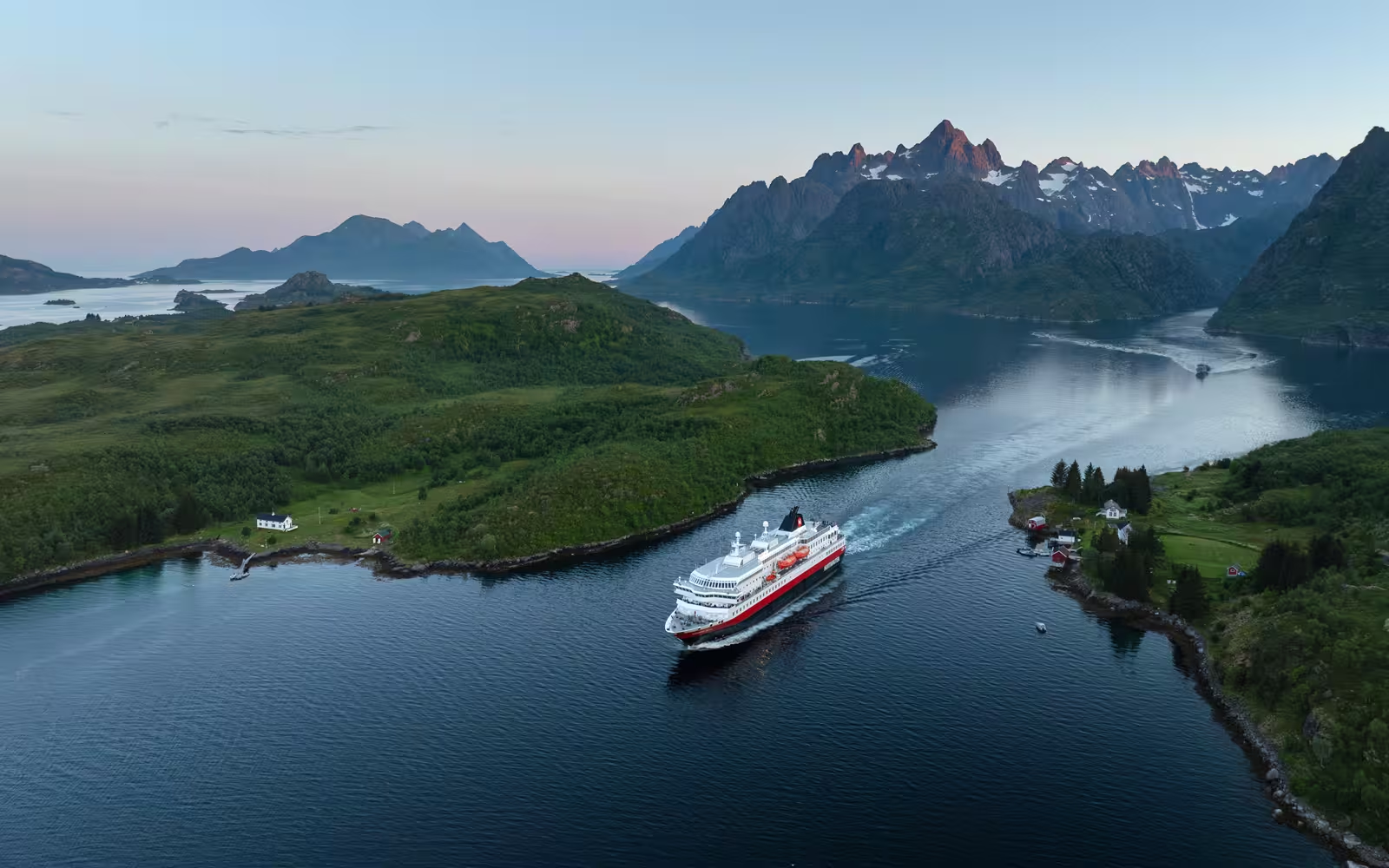
MS Richard With
One of the hybrid ships
Pictured in Raftsundet, northern Norway
MS Richard With is named after the founder of the Coastal Express. It is one of the ships refitted with battery packs, which take some of the load off the engines.
No ship is free of impact. The upgrade cuts emissions from the fleet Hurtigruten already has, while the zero emission design is developed.
The Rules
What Norway asks of ships
Since 1 January 2026, passenger ships of less than 10,000 gross tonnes must sail with zero emissions in Norway's World Heritage fjords. Larger passenger ships must do the same from 1 January 2032.
The World Heritage fjords are the Geirangerfjord, the Nærøyfjord, the Aurlandsfjord, the Sunnylvsfjord and the Tafjord. The Norwegian government says the aim is to cut emissions and to keep the fjords worth visiting.
Norway also pays for work against ocean plastic in other countries. Between 2018 and 2024 its aid programme put more than 1.6 billion kroner into over 60 projects. A second phase runs from 2025 to 2028, with up to a further 1 billion kroner.
On Board
What you can do on the ship
The useful things are small. Refill a bottle, take only the food you will eat, and keep everything out of the sea.
Cut out throwaway plastic
The United Nations Environment Programme estimates that 19 to 23 million tonnes of plastic waste leak into lakes, rivers and seas every year. Bring a refillable water bottle, and carry a cloth bag for anything you buy ashore.
Take what you will eat
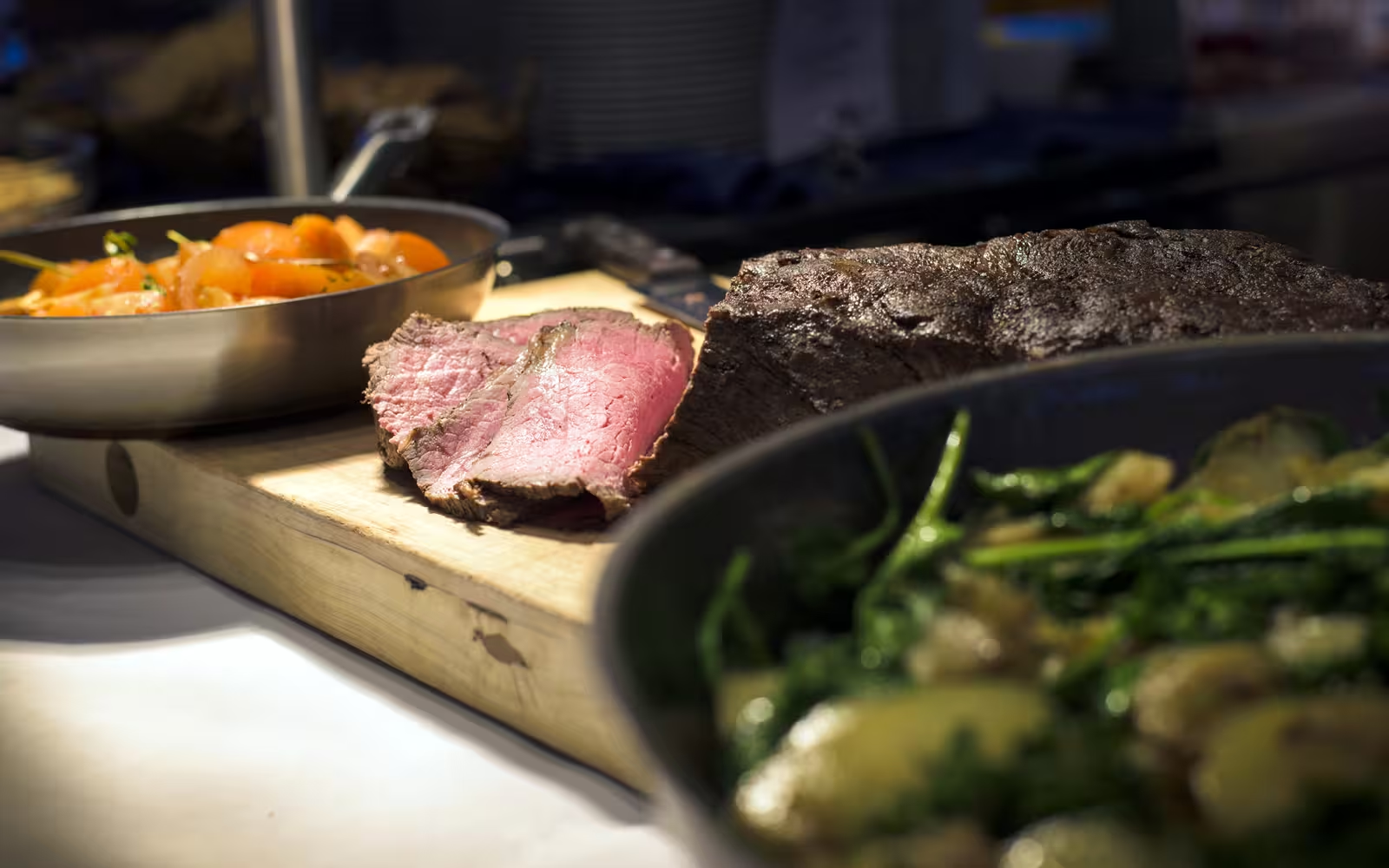
Hurtigruten composts food waste from its ships. Food that is never wasted is better still, so take a sensible plate and go back for more if you want it.
Never drop a cigarette end overboard
Cigarette ends turn up in coastal cleanups more often than any other item. Most filters are made of cellulose acetate, a plastic that can take ten years to break down. Smoking is allowed on the open deck. Use the ashtrays there.
Food on Board
From the galley to the farm
Stamsund, Lofoten
Hurtigruten puts food waste from its ships into a compost reactor at the port of Stamsund. A farm nearby spreads the compost on its fields.
The company says it wants to copy the scheme at more ports along the coast.
Ashore
On land: the right to roam, and its duties
Norway's right to roam lets anyone walk across open country, whoever owns it. Norwegians call it allemannsretten. It is an old custom, and since 1957 it has been written into law in the Outdoor Recreation Act.
The right comes with duties. These are the ones that matter on a day ashore.
- Leave no trace. Take every scrap of litter back with you.
- Leave wildlife alone. It is against the rules to disturb animals or birds, and that includes nests.
- No fires in summer. Open fires are banned in or near woodland from 15 April to 15 September.
- Give homes some space. Anyone camping must stay at least 150 metres from an occupied house or cabin.
- Use what is provided. Keep to marked paths and established picnic spots where there are any.
Many shore excursions are on foot, by bicycle or by kayak, and these are the gentlest on the places you visit. Buying food and crafts that are made locally keeps money in small coastal communities.
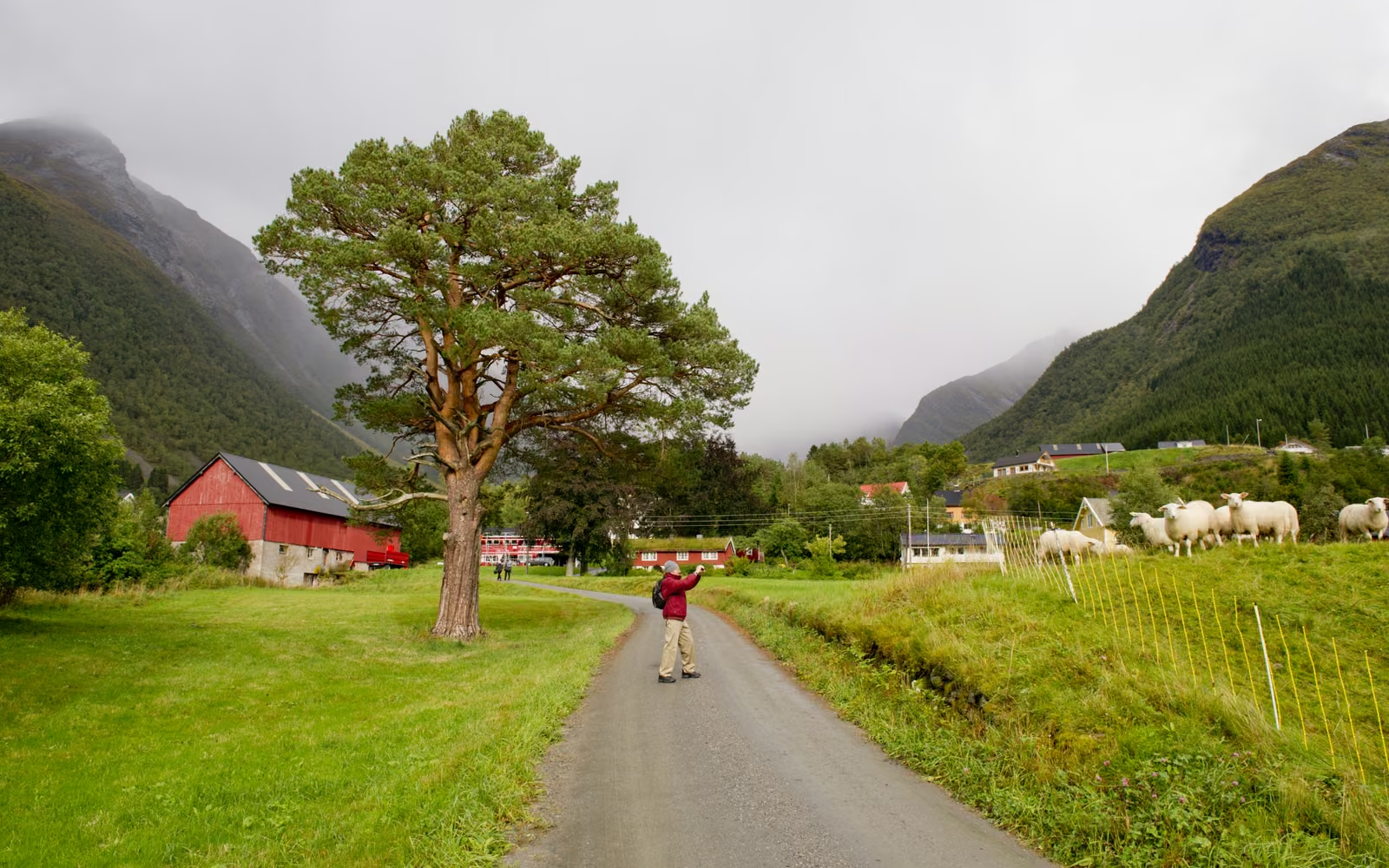
Hjørundfjord
Walk gently, and close the gate
Sunnmøre, western Norway
The right to roam covers open country. It does not cover farmyards, gardens or fields under crops, so keep to the lane where the land is being worked.
Sheep graze freely across much of rural Norway in summer. Give them room, and leave gates as you find them.
Wildlife
Watching wildlife without disturbing it
Keep your distance, keep quiet and never feed anything. Binoculars do more for wildlife watching than getting close ever will.
Svalbard has the strictest rules. You must stay at least 300 metres from a polar bear, and 500 metres from 1 March to 30 June. Boats keep 150 metres from walrus resting on the shore. Drones are banned in protected areas. Our guide to the Svalbard Line has the full picture.
At Sea
Let the animal decide
Whales, seabirds and seals
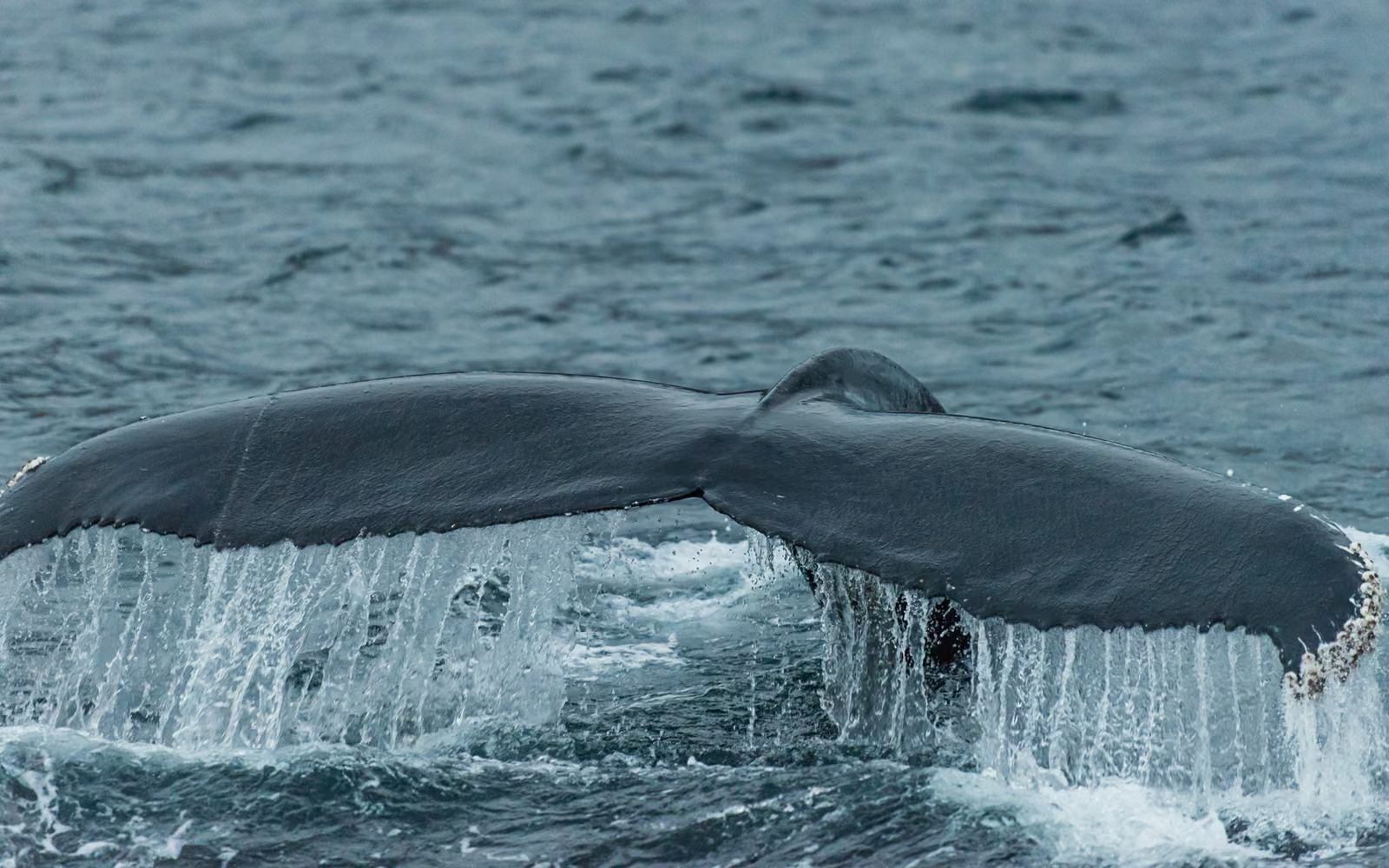
The best sightings happen when an animal carries on as if you were not there. On a whale or bird safari, a good skipper keeps the boat slow and lets the animal choose how near to come.
On deck, the same thing applies in a smaller way. Stay quiet, keep flash off, and enjoy the luck of it.
Getting There
Getting to the ship
If your voyage starts in Bergen, you can swap a domestic flight for a train. The Bergen Line runs between Oslo and Bergen across the mountains and takes about seven hours. Many people count it as a highlight of the trip.
Our Sail and Rail Norway tour joins the ship and the railway in one journey. Ask us about adding the train to your voyage.
Questions
Travelling responsibly in Norway: frequently asked questions
Is a Hurtigruten voyage environmentally friendly?
No ship is free of impact. Hurtigruten has fitted battery packs to several ships, can use shore power and biofuel, and says its fleet upgrade cut carbon dioxide by about 25 per cent. It removed unnecessary single use plastic in 2018 and is developing a zero emission ship for 2030.
Does Hurtigruten use single use plastic?
Hurtigruten removed unnecessary single use plastic from its ships and offices in the summer of 2018.
What are the zero emission rules for the Norwegian fjords?
Since 1 January 2026, passenger ships of less than 10,000 gross tonnes must sail with zero emissions in Norway's World Heritage fjords, which include the Geirangerfjord and the Nærøyfjord. Larger passenger ships must do the same from 1 January 2032.
What is the right to roam in Norway?
The right to roam, or allemannsretten, lets anyone walk across open country whoever owns it. It has been law since 1957. In return you must leave no trace, leave wildlife alone and keep off farmyards, gardens and crops.
Can I light a campfire in Norway in summer?
Not in or near woodland. Open fires are banned there from 15 April to 15 September.
How close can you get to a polar bear in Svalbard?
No closer than 300 metres, and 500 metres from 1 March to 30 June. The rule has applied since 1 January 2025.
Plan Your Trip
Talk to us about your voyage
We are agents for Hurtigruten. Call us or send an enquiry and we will help you choose a voyage, a ship and a time of year.
Sources: Hurtigruten, the Norwegian Maritime Authority, the Norwegian Ministry of Climate and Environment, Norad, the United Nations Environment Programme, Visit Norway, the Norwegian Trekking Association and the Governor of Svalbard. Figures checked in November 2026.