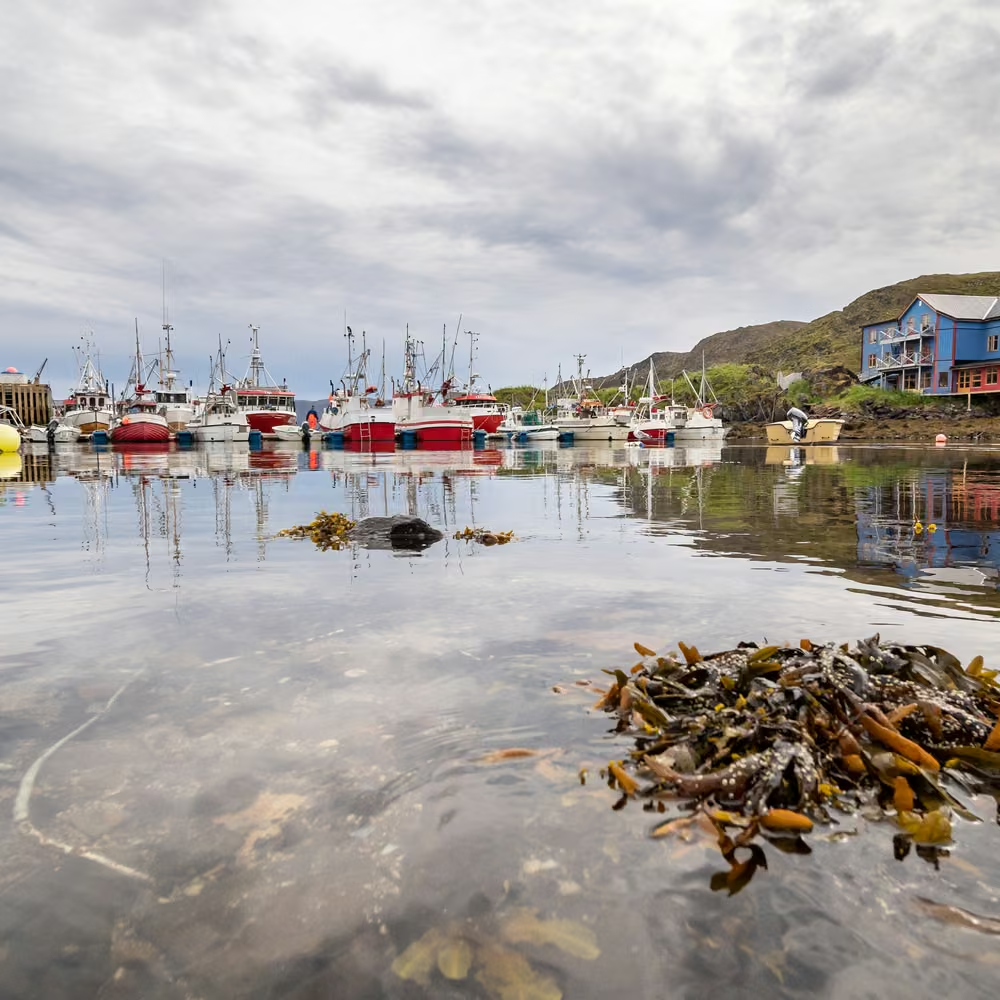
A one way, all-inclusive summer voyage up the Norwegian coast and across the Barents Sea to Svalbard, aboard MS Trollfjord or MS Midnatsol. Fourteen departures in 2027, with fares from £2,678 per person.
Most people who reach Svalbard do it by plane, landing at Longyearbyen after a few hours in a seat. The Svalbard Line North gets you there the old way, by sea, and it makes the arrival mean a great deal more. You board in Bergen, spend five days working north through some of the most celebrated scenery in Norway, then leave the mainland at the North Cape and sail on across open water until the mountains of Spitsbergen rise out of the Barents Sea.
This is the northbound half of Hurtigruten's Svalbard Line round voyage, sold on its own. The ports are the same handpicked set as the first week of the full voyage: Åndalsnes beneath the Romsdal mountains, the island community of Træna on the Arctic Circle, Reine at the southern tip of Lofoten, a full day in Tromsø, and Honningsvåg for the North Cape. Day seven is spent at sea, and on day eight the ship berths at Longyearbyen in the early afternoon, where your voyage ends and the Arctic begins.
£2,678per person, from
14 departures between 24 May and 6 September 2027
The Svalbard Line sails in summer under the Midnight Sun. At eight days it is shorter than the 11 days needed for Hurtigruten's Northern Lights Promise, and it sails outside the aurora season in any case. For a winter voyage built around the Northern Lights, look at the North Cape Line.
Who It Suits
Why sail north rather than fly
The northbound route suits travellers who want Svalbard as the destination rather than the turning point. Everything builds towards it: a week of mainland Norway at its summer best, with the light lengthening every night, then a day of open sea with nothing on the horizon, and finally the archipelago itself. Because the voyage ends in Longyearbyen, you can stay on in Svalbard for as long as you like afterwards, joining a boat trip, a glacier hike or a husky camp, rather than leaving the moment the ship turns round.
It also works well for anyone short of time. Eight days is a manageable holiday, and the itinerary still gives a full day or a long afternoon in each port rather than the brief cargo stops of the Coastal Express. If you would like to come home by sea as well, the Svalbard Line South runs the return leg from Longyearbyen to Bergen, and the full fifteen day round voyage combines both. If you would rather travel overland to Bergen first, Hurtigruten's Arctic Norway Frontier tour adds Oslo, the fjords and the Norway in a Nutshell rail route before boarding.
The Ships
MS Trollfjord or MS Midnatsol, depending on your date
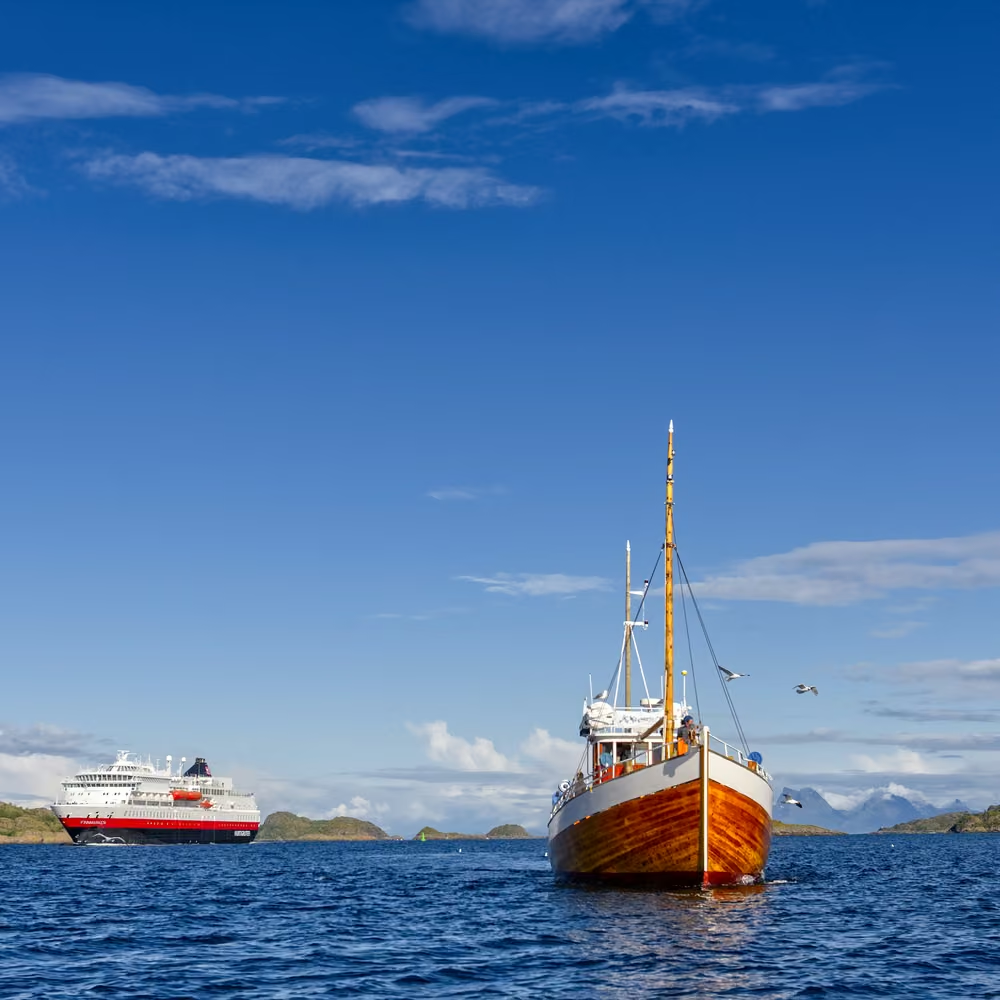
Two sister ships share the Svalbard Line through the 2027 season, and the fare table shows which one sails each date. MS Trollfjord and MS Midnatsol were both built for the Norwegian coast in the early 2000s and have since been refitted for Hurtigruten's Signature voyages, so the experience on board is very similar whichever you get, and you stay on the same ship from Bergen to Longyearbyen.
Signature means all-inclusive. Your meals are taken in Flora, which runs buffets, and Brasserie Árran, which does traditional Norwegian dishes at lunch and dinner, with selected beers, wines, spirits and soft drinks included throughout the day. Suite guests also have Røst, the fine dining restaurant, and a wider drinks list that includes cocktails. There is a panoramic lounge, an outdoor deck for watching the coast go by, a sauna and a fitness room. What you will not find are casinos or cabaret shows. The evenings belong to the scenery and to conversation.
The Expedition Team travel with you the whole way. They give themed talks on the ports, the wildlife and the Arctic, guide on deck as the ship passes landmarks, and lead small group walks ashore. On the crossing to Svalbard they are also the people who brief you on the archipelago's rules, which visitors need to understand before they step ashore.
Your Voyage
Day by day, Bergen to Longyearbyen
Seven ports and a day at sea over eight days. Optional excursions are listed under each port and are booked and paid for separately, either with us when you book or on board with the Expedition Team. Excursion programmes vary through the season, so not every option runs on every date.
Day 1
Bergen, setting out for the Arctic
Ports today · Bergen
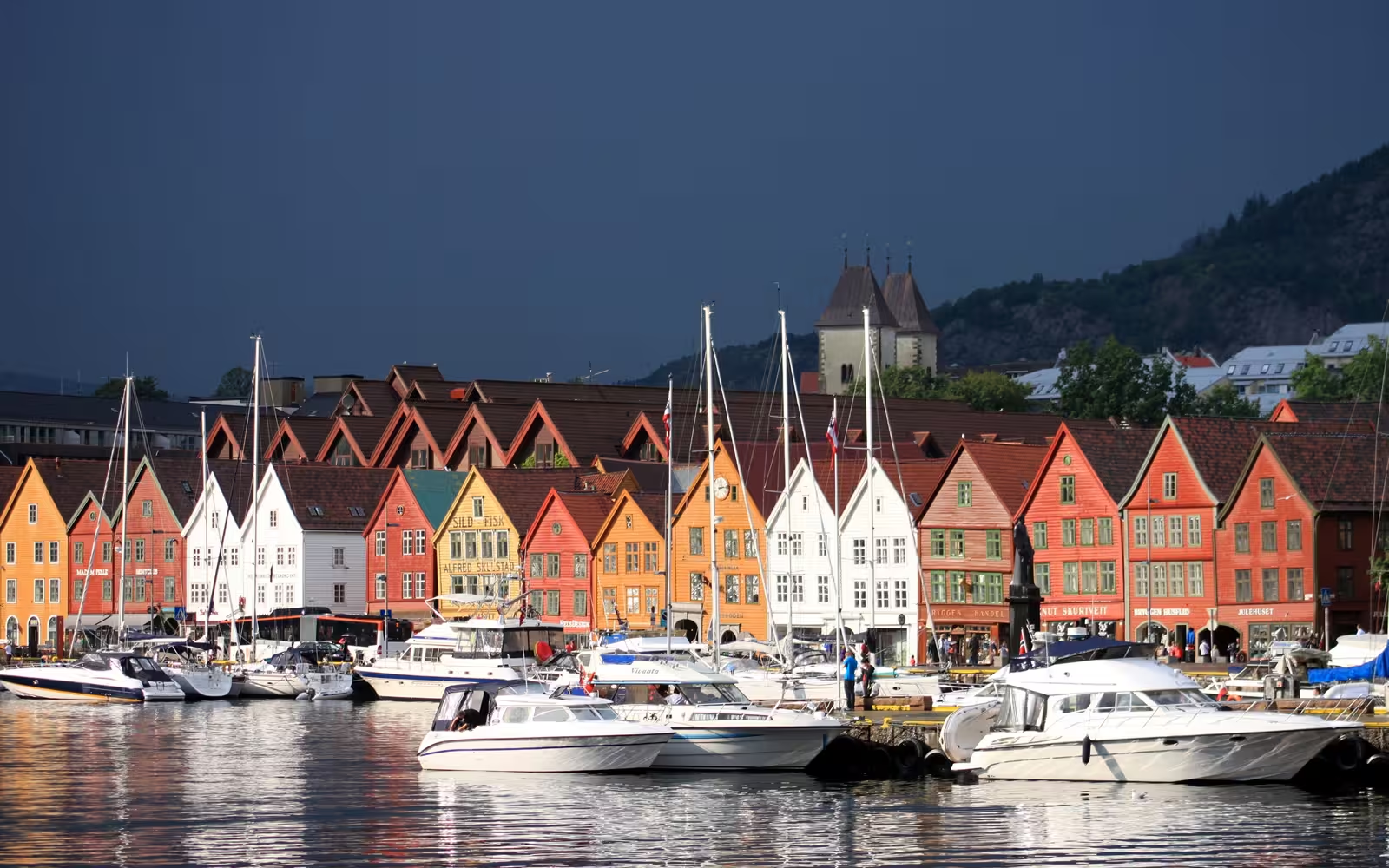
Bergen is Norway's second city and its most handsome harbour, a place that grew rich on the stockfish trade when merchants of the Hanseatic League ran their Norwegian business from the wharf at Bryggen. Their timber warehouses still lean over the waterfront, and the whole quarter has been on UNESCO's World Heritage list since 1979. Arrive in time to wander the narrow passages behind the facades, look in at the fish market, and perhaps ride the Fløibanen funicular for a view over the city and its seven hills.
Once you have boarded and found your cabin, the Expedition Team introduce themselves and outline the week ahead. Then the ship slips out past the islands into the Norwegian Sea and turns north, and the long summer evening begins.
Optional excursions
Fjord cruise to Mostraumen A three and a half hour boat trip from Bergen into the narrow Mostraumen strait, with steep mountainsides and waterfalls close enough to feel the spray. Offered as part of Hurtigruten's pre and post voyage programme.
Day 2 · Åndalsnes, at the foot of the Romsdal mountains
Ports today · Åndalsnes
The ship follows the Romsdalsfjord inland to its very end, where Åndalsnes sits on a sliver of flat ground with walls of rock rising on every side. The town was flattened by bombing in 1940 and rebuilt after the war, so its buildings are modest and modern; the setting is anything but. Just up the valley is Trollveggen, the Troll Wall, a sheer face of around 1,000 metres that is usually described as the tallest vertical rock wall in Europe.
The Romsdal Gondola rises from beside the quay to Nesaksla at 708 metres, and the view from the top takes in the fjord, the Rauma river and a horizon of jagged peaks. For something on wheels, the Rauma Railway runs up the valley past the Troll Wall, and the road over Trollstigen, the Trolls' Ladder, climbs in eleven hairpins up the mountainside. The region has a long tradition of mountaineering, and you will see climbers in the cafes as well as on the rock.
Optional excursions
Åndalsnes town walk and Romsdal Gondola A guided stroll through town, then the gondola to the summit for the panorama, a short walk on top and coffee with a view. About two and a half hours.
Hairpin bends and soaring mountains, Trollstigen scenic bus tour Along the Rauma river and up through the Isterdal valley to the Trollstigen road, with stops for the views. About three hours, from June.
Stand-up paddle board in Åndalsnes A guided paddle on calm water beneath the mountains, suitable for beginners. About four hours, June to August.
The Golden Train, summer A ride on the Rauma Railway through Romsdalen, a line regularly named among the most scenic in Europe. About two and a half hours, June to August.
Day 3
Træna and the Arctic Circle
Ports today · Træna
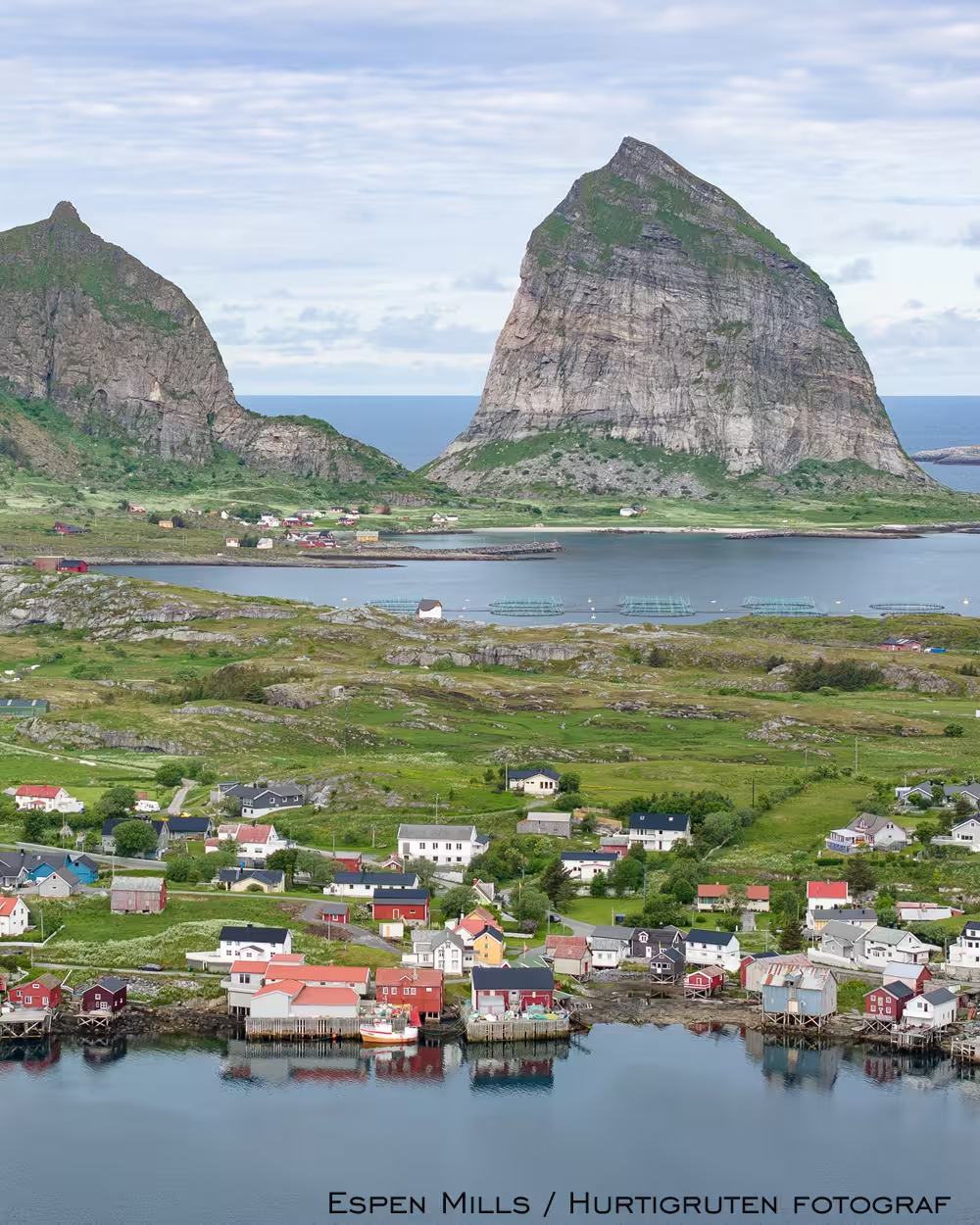
Out on the edge of the Helgeland coast, far beyond the last of the mainland islands, lies Træna, a scatter of around 500 islands, islets and skerries of which only a handful are lived on. Hurtigruten describes it as Norway's oldest fishing community, and the claim has substance: people have lived here and fished these waters since the Stone Age, and the cave of Kirkhelleren on the island of Sanna has yielded some of the oldest traces of settlement on this coast.
The village opens its doors to the ship's guests, so the afternoon is spent among the people who live here rather than at a distance. Walk the island paths, take a boat out to one of the other islands, or simply sit by the harbour and watch the seabirds. The jagged peaks of Sanna stand on the horizon, and on a clear day you can see the coastal mountains of the mainland far to the east. As the ship sails on, it crosses the Arctic Circle, and the moment is marked on board with a traditional ceremony in which volunteers get a ladle of icy water down the back of the neck.
Optional excursions
Træna island hopping A boat trip to the neighbouring islands to meet the people and see how life works this far offshore. About three hours.
Træna culture walk, poetry, art and heritage A guided walk through the islands' cultural landscape, taking in local art and the stories behind it. About two and a half hours.
Day 4
Reine, at the tip of Lofoten
Ports today · Reine
Lofoten comes into view as a wall of granite peaks standing straight out of the sea, and the ship heads for its far southern end, where Reine occupies a cluster of small islands joined by bridges. The red rorbuer, the fishermen's cabins raised on stilts over the water, are the image that made Reine famous, and seeing them in person, with Reinebringen and Olstinden rising behind, is one of the great moments of any Norwegian summer.
The wealth of these islands came from cod. Every winter the Arctic cod migrate to spawn in the waters off Lofoten, and for a thousand years fishermen have gathered to catch them and hang them on wooden racks to dry in the wind, producing stockfish that was traded across Europe. Close by is the village of Å, at the very end of the road, where old fishing buildings have been preserved as a museum of that way of life. In summer the drying racks stand empty, but the smell of the trade lingers in the harbours.
Optional excursions
Reine and Lofoten scenery A five hour tour through the villages and landscapes of western Lofoten, with time to stop and photograph them.
Kayaking in Reine A guided paddle among the islands and inlets around the village, with the peaks reflected in the water. About three hours.
Day 5
A full day in Tromsø
Ports today · Tromsø
The ship docks in the morning and you have the day in the largest city in northern Norway. Tromsø has been the jumping off point for Arctic voyages since the nineteenth century, when sealers and trappers sailed from here for Svalbard each summer, and later the great polar explorers came through to recruit crews and take on supplies. That history makes it the perfect last stop on the mainland before your own crossing.
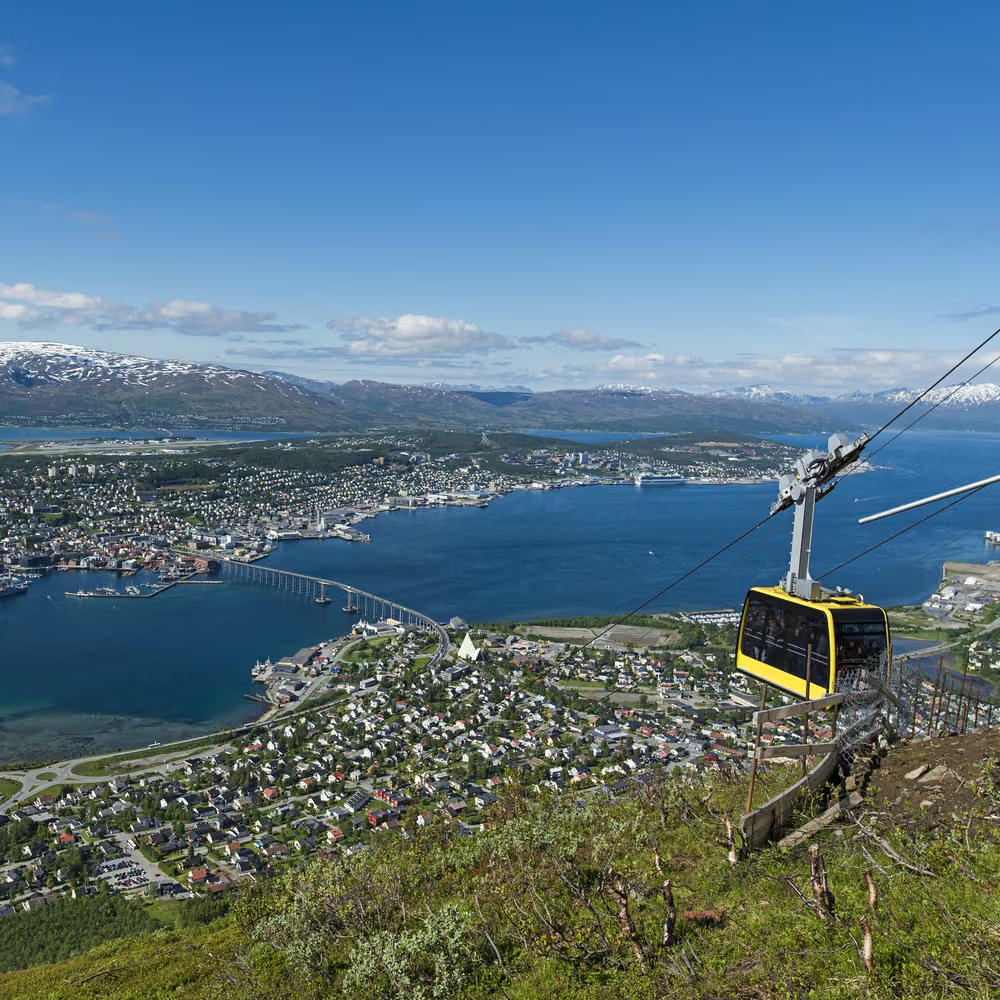
The Polar Museum on the harbour tells the story of the trappers and expeditions, and Polaria nearby is an Arctic aquarium with bearded seals. Across the bridge on the mainland side stands the Arctic Cathedral, its white triangular roof and great glass east window instantly recognisable, and the Fjellheisen cable car climbs from close by to the Storsteinen ledge for the view over the island city and the mountains around it. From late May to late July the sun does not set here at all, and the cafes and bars along the waterfront stay busy well into the bright night.
Optional excursions
Tromsø, the Arctic capital The cable car to Storsteinen for the panorama, the Arctic Cathedral and Polaria, all in one three and a half hour tour.
Tromsø on foot, the city and its polar history A guided walk through the old wooden town and the stories of the hunters and explorers who sailed from it. About three and a half hours.
Explore Tromsø by e-bike A small group ride on electric bikes to see more of the island than you could on foot. About three hours.
The northernmost brewery A ninety minute visit to the Mack brewery, founded in Tromsø in 1877, with a tasting. June to August.
Day 6
Honningsvåg and the North Cape
Ports today · Honningsvåg
The ship reaches Honningsvåg around mid morning. It is a small fishing town on the island of Magerøya, rebuilt after the Second World War when almost everything else was burned in the German retreat; the church was among the few buildings to survive. Today it is the gateway to the North Cape, the great cliff that most people think of as the top of Europe.
Nordkapp stands 307 metres above the sea, and on a clear day the view from the plateau runs north towards nothing but ocean and ice. The steel globe monument on the edge of the cliff is the photograph everyone takes, and the visitor centre behind it is cut deep into the rock. Strictly speaking the neighbouring headland of Knivskjellodden reaches a little further north, but it takes a long walk to get there, and the North Cape has the drama. When the ship leaves Honningsvåg it heads out into the Barents Sea and leaves mainland Europe behind.
Optional excursions
The North Cape Across Magerøya to the plateau for the views, the globe monument and the exhibitions in North Cape Hall. About three hours.
North Cape and king crab experience, summer The North Cape plus a visit to a local fishing community for a meal of king crab hauled from the Barents Sea. About five hours.
Birdwatching safari and the North Cape The North Cape, then a boat trip to the bird cliffs at Gjesvær, home to puffins and huge colonies of other seabirds. About five and a half hours, April to August.
Quad biking to the North Cape Ride your own quad bike across the island to the Cape. About four and a half hours.
RIB and king crab experience A fast boat trip along the coast to check the crab pots, followed by king crab cooked the local way. About three and a half hours, June to August.
Day 7 · Crossing the Barents Sea
Ports today · At sea
This is the one full day at sea, and for many guests it turns out to be a highlight. The ship runs north across the Barents Sea with no land in sight for hours on end, and the Expedition Team give a lecture on Svalbard, its history, wildlife and the rules for visitors, so that you arrive knowing what you are looking at and how to behave. The galley lays on a special tasting out on deck.
Somewhere along the way the ship passes Bjørnøya, Bear Island, the southernmost island of the Svalbard archipelago. Willem Barentsz's expedition named it in 1596 after an encounter with a polar bear, and its cliffs hold some of the largest seabird colonies in the Barents Sea. Keep binoculars handy for fulmars, kittiwakes and little auks, and for the blows of whales; the water between here and Spitsbergen is good feeding ground. Under the Midnight Sun, the day does not so much end as fade into an evening that goes on until morning.
Day 8
Longyearbyen, arriving in Svalbard
Ports today · Longyearbyen
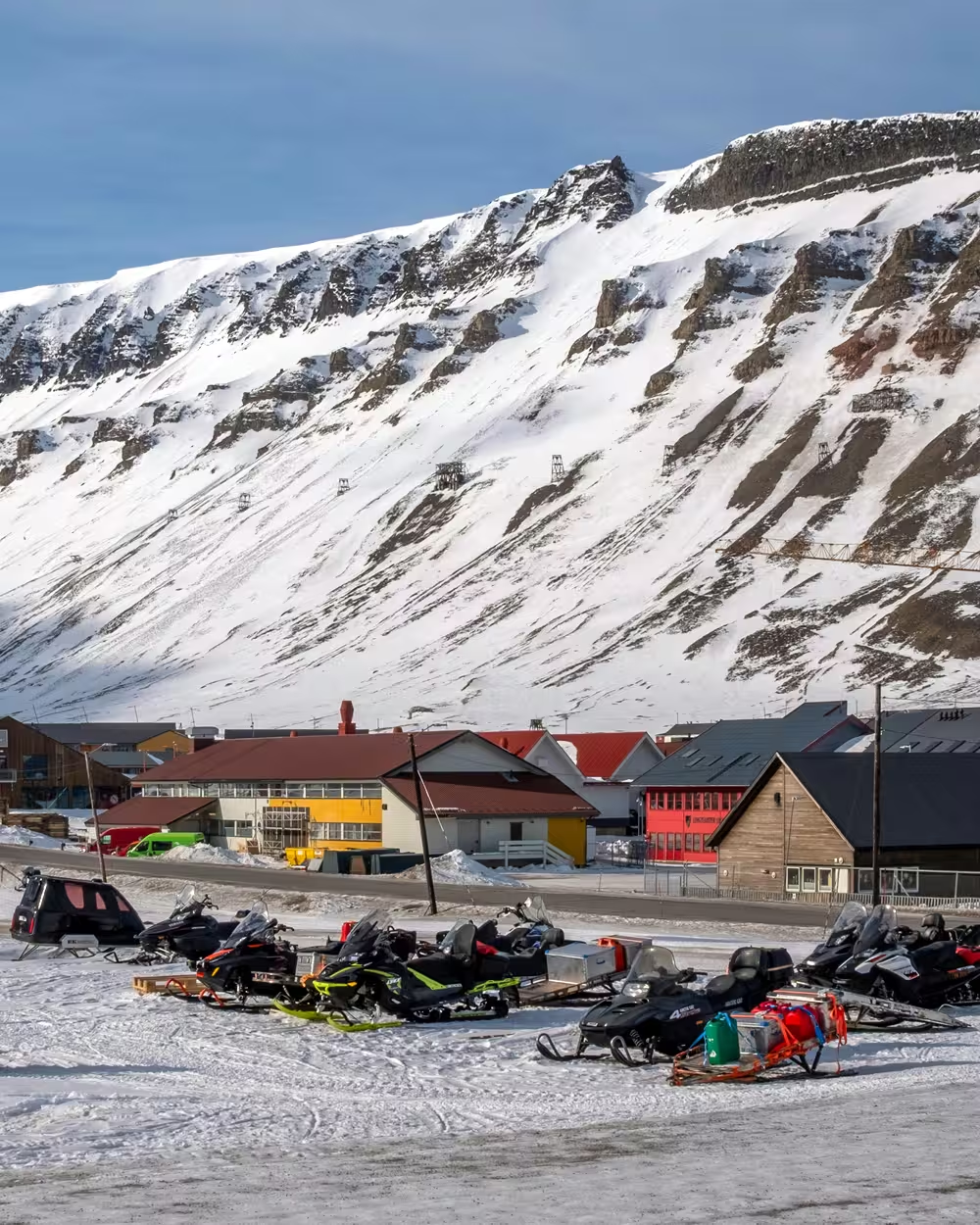
Spitsbergen, the largest island of the archipelago, appears first as a line of pointed peaks with snow in the gullies, which is exactly how Barentsz described it more than four centuries ago. The ship turns into Isfjorden and berths at Longyearbyen in the early afternoon, at a little over 78 degrees north. About 60 percent of Svalbard is covered by glaciers, and from the quay you can see several of them.
Longyearbyen began as a company town. The American industrialist John Munro Longyear and his Arctic Coal Company started mining here in 1906, and Norway's Store Norske company took over ten years later. Coal shaped the town for more than a century, until the last Norwegian mine, Mine 7, closed in June 2025. Today Longyearbyen is home to between two and three thousand people from dozens of countries, along with the University Centre in Svalbard and, a short way out of town, the Svalbard Global Seed Vault, opened in 2008 to safeguard copies of the world's crop seeds deep in the permafrost.
The voyage ends here. We recommend staying on for at least a night or two: the Svalbard Museum is excellent, there are boat trips to glaciers and abandoned settlements, and there is no stranger feeling than walking back to your hotel at midnight in full sunshine.
About Svalbard
The archipelago at the end of the voyage
Svalbard is Norwegian, but not quite like the rest of Norway. Its status rests on the Svalbard Treaty, signed in Paris on 9 February 1920 and in force since 14 August 1925. The treaty recognised Norway's sovereignty over the islands while giving citizens of every signatory country equal rights to live and do business there, which is why Russia still runs a coal mining settlement at Barentsburg, a short way along the coast from Longyearbyen. It also means there is no visa requirement for Svalbard itself, although you need a passport or valid national ID to go ashore, and you will normally have travelled through mainland Norway to get there.
Polar bears are the archipelago's most famous residents, and they are protected. A survey by the Norwegian Polar Institute in 2015 estimated around 264 bears living in Svalbard itself, with several hundred more on the pack ice to the north. They range widely, so anyone leaving the settlements must carry means of scaring off a bear, and guides carry rifles as a last resort. In practice sightings from Longyearbyen are rare, and Hurtigruten is honest that you should not expect one. You are far more likely to see Svalbard reindeer, a small, stocky subspecies found only here, along with Arctic foxes, walrus, seals and summer seabirds in great numbers.
The Midnight Sun reaches Longyearbyen around 20 April and stays until about 23 August, so departures up to mid August arrive under it. On the later sailings the sun is setting again at night and the first proper nights are returning.
Watch
The Svalbard Line ports, explained
A short guide from Life in Norway to the ports on the Svalbard Line and how to say their names, with background from one of MS Trollfjord's officers.
Fares
Svalbard Line North fares 2027
Prices are in pounds per person for two people sharing a cabin, for the voyage only. Each sailing is listed with its ship. Hurtigruten prices its cabins dynamically, so the fares shown are the lowest available on each date when we checked, and they tend to rise as the ship fills. There are 14 northbound departures in 2027, from late May to early September.
Departure date
Ship
Polar Inside
Polar Outside
Arctic Superior
Expedition Suites
24 May 2027
MS Trollfjord
from £2,845
from £3,674
from £4,635
from £7,203
31 May 2027
MS Midnatsol
from £2,856
from £3,518
from £4,713
from £7,188
7 June 2027
MS Trollfjord
from £2,897
from £3,637
from £4,843
from £12,458
21 June 2027
MS Trollfjord
from £2,877
from £3,591
from £5,064
from £12,762
5 July 2027
MS Trollfjord
from £3,053
from £3,533
from £4,645
from £12,095
12 July 2027
MS Midnatsol
from £2,797
from £3,444
from £4,675
from £6,946
19 July 2027
MS Trollfjord
from £2,778
from £3,386
from £4,615
from £7,268
26 July 2027
MS Midnatsol
from £2,760
from £3,195
from £4,554
from £6,808
2 August 2027
MS Trollfjord
from £2,778
from £3,195
from £4,493
from £6,992
9 August 2027
MS Midnatsol
from £2,737
from £3,272
from £4,635
from £7,203
16 August 2027
MS Trollfjord
from £2,845
from £3,328
from £4,487
from £6,798
23 August 2027
MS Midnatsol
from £2,755
from £3,148
from £4,546
from £6,888
30 August 2027
MS Trollfjord
from £2,713
from £3,363
from £4,535
from £6,959
6 September 2027
MS Midnatsol
from £2,678
from £3,120
from £4,535
from £6,738
Fares are per person in pounds, based on two sharing, and were checked on 20 October 2026. They are subject to availability and may change at any time; call 0333 405 0194 for a live quote. Single supplements on request. Not every cabin category is available on every departure.
All-Inclusive
What your fare includes
The Svalbard Line is one of Hurtigruten's Signature voyages, so food and selected drinks are included throughout. The cabin column covers Polar Inside, Polar Outside and Arctic Superior cabins; the suite column covers the Expedition Suites, which add fine dining and a premium drinks list.
What's included
Cabin Polar Inside, Polar Outside and Arctic Superior
Suite Expedition Suites
Food and drink on board
All meals Breakfast, lunch, an afternoon snack and dinner every day, with buffets in Flora and lunch and dinner in Brasserie Árran
Included
Included
Unlimited selected drinks Selected beers, wines, spirits and soft drinks
Included
Included
On-deck food tastings Tastings of regional produce out on deck
Included
Included
Fine dining at Røst The ship's fine dining restaurant
Not included
Included
Unlimited selected cocktails A premium drinks list including cocktails
Not included
Included
Life on board
Expedition Team Daily themed talks, on-deck guiding and informal evening gatherings
Included
Included
Sauna, fitness room, panoramic lounge and outdoor deck
Included
Included
WiFi Available on board, though coverage is limited on the Barents Sea crossing
Included
Included
Not included: flights, transfers and hotels unless booked with us, optional shore excursions, and travel insurance. You can arrange travel insurance online here.
Flights & Hotels
Getting to Bergen and home from Svalbard
Hurtigruten does not sell ready made UK flight packages for this one way voyage, but that does not mean you have to sort it out alone. We can arrange flights and connections on request: a flight from the UK to Bergen to join the ship, and a flight home from Longyearbyen at the end, which normally means connecting through mainland Norway. Tell us your preferred UK airport and we will look at the options for your date.
Because the ship arrives in Longyearbyen in the early afternoon, it is worth thinking about a hotel there rather than rushing for a same day flight. We can add nights in Longyearbyen, and pre voyage nights in Bergen too if you would like to arrive a day early and see the city properly. See our Bergen hotels for ideas.
Flights, hotels and transfers are quoted individually on request. Call 0333 405 0194 and we will put the whole journey together for you.
Questions
Frequently asked questions
How is the Svalbard Line North different from the full Svalbard Line voyage?
It is the northbound half of the fifteen day round voyage, sold on its own. You sail from Bergen to Longyearbyen over eight days and the voyage ends in Svalbard, so you do not visit Ny-Ålesund or the southbound ports of Senja, Bessaker and Ålesund. Those are on the Svalbard Line South.
Which ship will I sail on?
Either MS Trollfjord or MS Midnatsol, depending on your departure date. The fare table shows the ship for each sailing, and you stay on the same ship for the whole voyage.
When does the ship arrive in Longyearbyen?
The ship berths in Longyearbyen in the early afternoon of day eight, around 13:00, and the voyage ends there. We recommend booking at least one night in Longyearbyen rather than a same day flight home.
Do I need a visa or passport for Svalbard?
No visa is needed for Svalbard itself, but you must carry a valid passport or national ID card, or you will not be allowed ashore. You will also pass through mainland Norway, which is in the Schengen area, so the normal entry rules for Norway apply.
Will I see polar bears?
Probably not, and it is better to arrive without that expectation. Svalbard has a few hundred resident polar bears, but they rarely come near Longyearbyen and this voyage ends there. You are much more likely to see Svalbard reindeer, Arctic foxes, seals and huge numbers of seabirds, and whales are often seen on the Barents Sea crossing.
Will I see the Midnight Sun?
On most departures, yes. The sun does not set at Longyearbyen from around 20 April to about 23 August, and at the North Cape from mid May to the end of July, so the sailings from late May to mid August see it. On the departures from late August the sun dips below the horizon again at night, although there is still plenty of daylight.
What is included in the fare?
All meals, an afternoon snack, unlimited selected beers, wines, spirits and soft drinks, on-deck tastings, the Expedition Team programme, and use of the sauna and fitness room. Suite guests also have fine dining at Røst and selected cocktails. Shore excursions, flights and hotels are extra.
Can you book my flights?
Yes. Hurtigruten does not list UK flight packages for this voyage, but we can arrange flights to Bergen and home from Longyearbyen on request, along with hotels at either end.
Does the Northern Lights Promise apply?
No. The promise only covers voyages of 11 days or more sailing between 20 September and 31 March. This is an eight day summer voyage, when the skies are too light for the aurora.
Is there WiFi on board?
Yes, WiFi is available on board, although coverage is limited while crossing the Barents Sea, so expect a day of patchy connection before Svalbard.