The Working Coast
The sheer variety of the coast
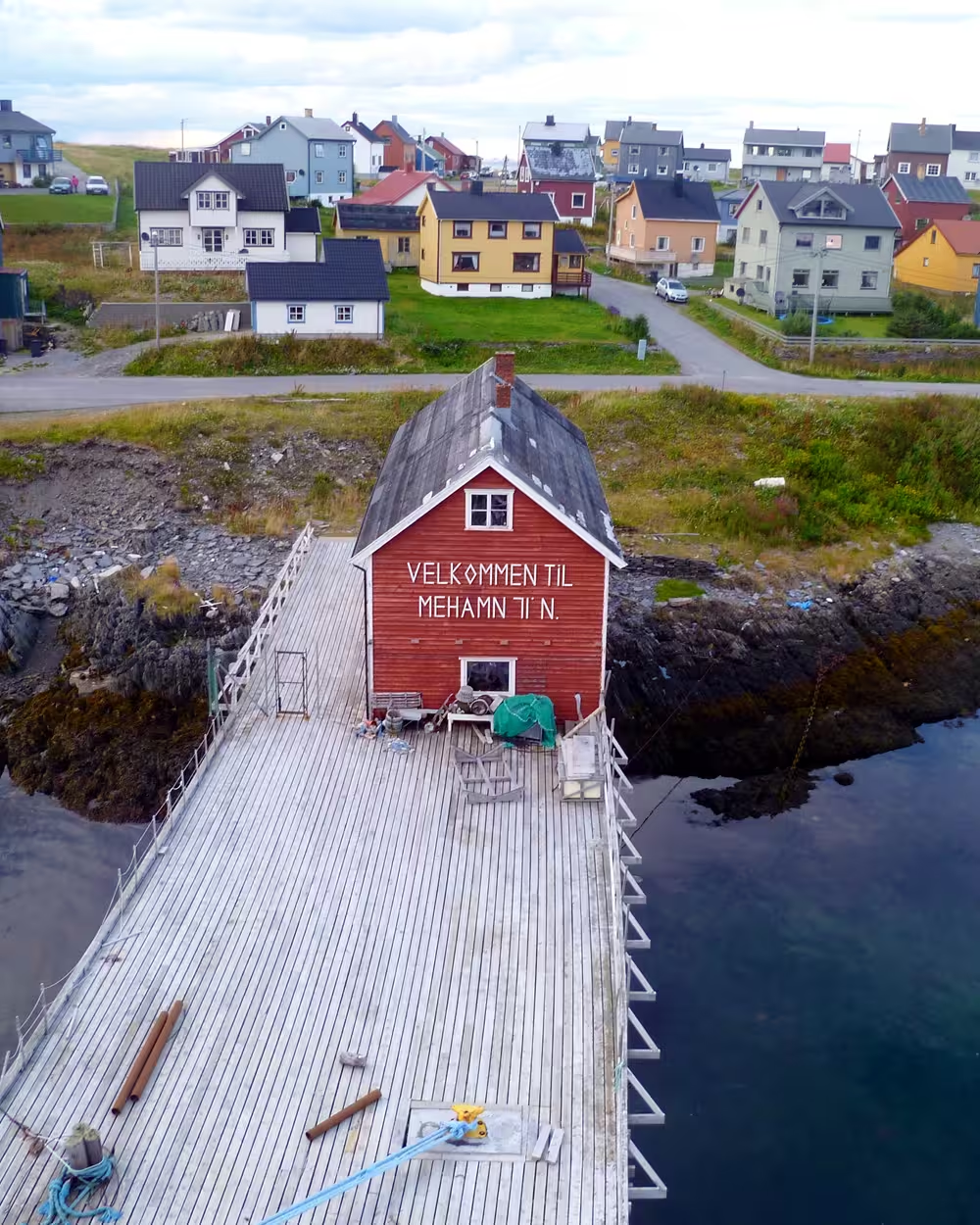
As with the scenery en route, it is the sheer variety of sights, sounds, smells and surprises which makes the Hurtigruten Coastal Voyage such a delight. Many of the stopping off points along the way are little more than tranquil hamlets on tiny islands, whose inhabitants depend for their very existence on the Hurtigruten ships, bringing essential food and supplies, or carrying them to the nearest town for shopping expeditions.
Other ports of call are long established, bustling towns, owing their prosperity to the fishing, mining or shipbuilding industries. These are the main ones, sailing from south to north.
Bergen
Founded in 1070, this vibrant city has long attracted travellers to its unique harbour setting, and its ancient medieval streets still hark back to the days of the Hansa merchants, who turned this northern port into one of the pivotal centres of their expansive commercial empire. Take a stroll through the labyrinthine streets and alleys of old Bergen, visit the traditional painted Hanseatic warehouses of the UNESCO listed Bryggen district, or take in the hustle and bustle of the engaging fish market.
The city is also a centre for cultural excellence, with galleries, museums and theatres offering a wealth of opportunities to discover Bergen's rich heritage, and it hosts an international festival each year, one of the largest cultural events in Norway. But this is a city as much in tune with the present as the past, with an enviable array of fine restaurants, lively bars and engaging attractions, and a trip on the funicular railway to the top of Mount Fløyen presents the city and its breathtaking surroundings in all their glory. Staying a night or two? See our Bergen hotels.
Ålesund
After it was destroyed by fire in 1904, this pretty little town was rebuilt in the fashionable Art Nouveau style of the era. So much of Ålesund is surrounded by water that the town itself appears to be floating serenely alongside the vessel. Visit the viewing point at Mount Aksla for fantastic views over the rooftops and islands, and try the smoked wild salmon, a local speciality.
The town is also home to one of Northern Europe's largest aquariums: Atlanterhavsparken, the Atlantic Sea Park, is built into the coastal landscape, giving visitors a special insight into life in the surrounding waters. An open air museum features numerous houses and boats reassembled from around the region, telling the story of days gone by in tranquil parkland. Several excursions explore the town and the nearby Hjørundfjord.
Geirangerfjord
Geiranger is the crowning glory among the pearls of Norway's fjord country. Majestic snow covered mountain peaks, wild waterfalls, lush green vegetation and the deep blue waters of the fjord: it really is like something from a fairy tale. A UNESCO World Heritage Site since 2005, the fjord is guarded by cliffs rising some 1,400 metres from the water.
Between 1 June and 31 August the northbound ships sail into the Geirangerfjord itself, and you can join the Geiranger with Trollstigen Pass excursion ashore, weaving up hairpin bends to look down on the fjord from above. A mountain lover's delight.
Molde
Molde, known as the City of Roses, is a thriving coastal town set in magnificent scenery; the famous Molde panorama takes in more than 200 snow capped peaks on a clear day. The old town has charming wooden buildings, and each July the town hosts Moldejazz, one of Europe's oldest international jazz festivals.
Trondheim
Originally an important harbour for Viking expeditionary forces, Trondheim became the ecclesiastical centre of Norway after the death of St Olav in 1030, as pilgrims from all over Europe came to Nidaros, as the town was then known. Nidaros Cathedral remains one of Europe's foremost Gothic monuments. Today this city at the mouth of the River Nid is a visual delight thanks to its numerous wooden buildings, including the splendid Stiftsgården Palace, and it is a great cultural centre, with a famous museum of musical instruments at Ringve. The ships call here in both directions, with excursions from city walks to kayaking on the Nid.
Bodø
Like many towns in northern Norway, Bodø was completely rebuilt after the war and is today a thoroughly modern town with a thriving commercial centre. The Norwegian Aviation Museum, opened here in 1994, has become one of the country's most popular museums. Off the coast is Saltstraumen, the world's strongest tidal current, several million cubic metres of water forced through a narrow strait every six hours, and the subject of two excursions.
The Lofoten and Vesterålen Islands
These beautiful mountainous island chains, rising to 1,000 metres in places, are among the oldest landscapes in the world, carved by the Ice Age. Fishermen's cabins stand on stilts along the waterfront of the small settlements, and the Trollfjord, between the two island groups, is one of Norway's narrowest and most spectacular. Many of the tiny islands, such as Røst, are home to nesting seabirds including puffins, guillemots, kittiwakes, eider ducks, cormorants and sea eagles. The main ports are Svolvær and Stamsund in Lofoten, and Sortland, Stokmarknes and Risøyhamn in Vesterålen.
Stokmarknes
The birthplace of Hurtigruten, where the Hurtigruten Museum tells the illustrious story of the coastal service, and entry is free for Hurtigruten passengers. The museum's centrepiece is the original MS Finnmarken of 1956, preserved complete and now housed inside the museum's striking purpose built hall on the quayside.
Harstad
Originally a flourishing centre of the herring trade, Harstad moved into shipbuilding with equal gusto. Fertile farmland to the east supplies the dairy and meat processing industries, while to the west the offshore harvest of oil from the ocean bed has meant continued prosperity for this lively port town. Nearby Trondenes, with its medieval church and historical centre, is the highlight of the southbound Taste of Vesterålen excursion.
Tromsø
Cheerfully describing itself as the Paris of the North, Tromsø is familiar as the starting point of many polar expeditions. A university town blessed with a girdle of peaks reminiscent of Switzerland, it is one of the most pleasant of Norwegian coastal towns, with the Arctic Cathedral, the Polaria centre and a lively cafe and pub scene. The ships give you a generous stop here in each direction, with excursions from dog sledding to a midnight concert.
Hammerfest
Hammerfest, the northernmost town in the world, sits at the same latitude as northern Siberia but remains largely ice free thanks to the offshore Gulf Stream. The fur trade and commerce with neighbouring Russia brought early prosperity, as did the growing fish processing industry, and its strategic position made it a base for Germany's fleet during the Second World War. Visit the amusingly named Royal and Ancient Polar Bear Society for a taste of Arctic history, and see the UNESCO listed Meridian Column, marking the first precise measurement of the globe.
Honningsvåg and the North Cape
Honningsvåg is the largest fishing village in Finnmark, completely rebuilt after the last war. It is the gateway to the North Cape, the famous plateau rising 300 metres from the Arctic Ocean at the top of Europe, and the ships stop long enough for the North Cape excursion in both directions, northbound by day and southbound with the early morning Breakfast at the North Cape.
Kirkenes
Kirkenes, the turning point of the Coastal Voyage, lies just ten kilometres from the Russian border, further east than Istanbul. The town was razed to the ground in 1944 and rebuilt after the war. The deep fjord in which the harbour lies limits the effect of the Gulf Stream, and in winter the water can ice over. Mining, timber and the port keep this vibrant little town alive and kicking despite its remote location, and its winter excursions, from the Snowhotel to husky sledging, are among the best on the route. Staying on? See our Kirkenes hotels.
Plan Your Voyage
Where to go from here